Hi All! I'm hoping to be active on this blog again with lots of exciting stuff going on. Lots of electronic quirks causing issues at the moment. See you soon!
Yoga, yoga for empowerment, yoga principles, yoga techniques, yoga philosophy, barefoot, barefoot living, barefoot running
Monday, July 28, 2025
Wednesday, August 22, 2018
Yoga in the Park Thornton, CO August 2018
Greetings Yogis!
Please see the following link for our Yoga class locations for the next two weeks. You may want to use the parking lot on York St and walk down, it's a very short walk. The parking lot off of 128th is small.
For the next two Saturdays, there will be one class that starts at 10:30 AM.
There will be class at 6:45 pm this coming Tuesday in the same location.
The Rec Center re-opens the Tuesday following Labor Day.
Many Blessings!
Vincent
https://www.google.com/maps/place/Lake+Village+Park,+12900+York+St,+Thornton,+CO+80241/@39.9304992,-104.9599566,16z/data=!3m1!4b1!4m5!3m4!1s0x876c746e9697c517:0x53cc2ab33428971!8m2!3d39.9301676!4d-104.9553131
Lake Village Park, 12900 York St, Thornton, CO 80241
Monday, February 19, 2018
To chant or not to chant? That is the question
Should we teach chanting in Yoga classes?
Do you, as a Yoga student think chanting is too weird?
How about Yoga teachers: do you think it is too complicated or should be off-limits?
"No chanting, just yoga" is what the add for the newest branch of Bulldog Yoga one of the newest studios in Boulder, CO reads.
I wasn't sure what to make of this, not just because the website was slow and it took three tries to get it from giving me 404 responses, but because they quoted Beethoven and made other cool statements about feeling the power of music and about the "physical and mental rewards" that practicing yoga brings.
A studio chain in England called Yoga Convert made a similar statement about Yoga being an uplifting thing, and their version is chant-free.
I don't do a huge amount of chanting in my classes, but since I stared practicing almost 17 years ago, I've always felt that chanting had a natural place somewhere amidst the whole, big picture.
Simple chants, such as repeating "aum" or "aum shanti" do take on meaning to participants, but much of the value in such chanting is, intentionally, physical. I learned this long ago when training in YogaFit Level 3.
There weere at least 30 of us, and we began chanting "aum", and soon, we found ourselves with perfect timing-we chanted in absolute synchronicity. To describe with words the energy we felt would do it injustice; it had to be felt.
Yoga means union-of all things, all energies from all sources, of all people who participate together.
So while we might not do long chants as part of class, let's not lose this important connection.
Please do share your thoughts!
Blessings!
Do you, as a Yoga student think chanting is too weird?
How about Yoga teachers: do you think it is too complicated or should be off-limits?
"No chanting, just yoga" is what the add for the newest branch of Bulldog Yoga one of the newest studios in Boulder, CO reads.
I wasn't sure what to make of this, not just because the website was slow and it took three tries to get it from giving me 404 responses, but because they quoted Beethoven and made other cool statements about feeling the power of music and about the "physical and mental rewards" that practicing yoga brings.
A studio chain in England called Yoga Convert made a similar statement about Yoga being an uplifting thing, and their version is chant-free.
I don't do a huge amount of chanting in my classes, but since I stared practicing almost 17 years ago, I've always felt that chanting had a natural place somewhere amidst the whole, big picture.
Simple chants, such as repeating "aum" or "aum shanti" do take on meaning to participants, but much of the value in such chanting is, intentionally, physical. I learned this long ago when training in YogaFit Level 3.
There weere at least 30 of us, and we began chanting "aum", and soon, we found ourselves with perfect timing-we chanted in absolute synchronicity. To describe with words the energy we felt would do it injustice; it had to be felt.
Yoga means union-of all things, all energies from all sources, of all people who participate together.
So while we might not do long chants as part of class, let's not lose this important connection.
Please do share your thoughts!
Blessings!
Tuesday, August 22, 2017
Saturday Yoga during Carpenter Rec Center Shut-down 10:30 am at Lake Village Park!
While the Margaret Carpenter Rec Center is shut down, I'll be hosting one Yoga class each of the next two Saturdays 9August 26 & September 2) at Lake Village Park in Thornton, across from the Eastlake Preserve.
Click HERE for directions!
Fee to attend is $5.00 per person.
Blessings!
Vincent
Click HERE for directions!
Fee to attend is $5.00 per person.
Blessings!
Vincent
Monday, July 3, 2017
Your Second Chakra-Creative Power and Energy
Creative people have many faces. We all have areas where we are able to be creative. Each of us also has passion; much depends on what we like or are exposed to in our lives.
The powerful, driving force comes from our second Chakra, or Svadisthana. The second Chakra is a powerful one, and the subject of mature discussion, as it also governs sexual energy.

When the second chakra is properly balanced, we are able to empathize, to initiate and create and to share sincerely with others. This kind of sharing includes willingness to foster connections with others that are mutually beneficial and empowering to all parties.
When the second chakra becomes imbalanced, the impact is especially apparent.
When it is overcharged, due to a spiritual blockage that prevents energy from flowing upward to the third chakra and beyond, one can become overly self-serving, will act shallow and fail to recognize emotional boundaries with the self and with others. Sexual energy can also build to an unhealthy level.
Cat pose (Majaryasana), Doward Dog (Adho Mukha Svanasana) and Cobra (Bhujangasana) all can calm the second chakra down. Also, you can meditate on the color blue-use a a blue light or a piece of blue material to look at. One can modify Cobra into Sphinx pose (Salamba Bhujangasana)
If the second chakra is undercharged due to weak energy flow, one becomes emotionally cold, distrusting and overly sensitive.
Triangle pose (Trikonasana), Revopled Triangle pose (Parivrrta Trikonasana) and King Pigeon (Raja Kapotasana)-1st stage are all effective poses to help awaken the second chakra. You can also meditate on the color orange.
FIND PICTURES AND DESCRIPTIONS OF YOGA POSES IN THE ASANA INDEX AT:
http://yogadancer.com/
I have no affiliation with this site but it is a fabulous resource, so enjoy it and do donate if you can.
SOURCES:
Saturday, June 24, 2017
Your First Chakra...and Your Yogic Roots
We've all known some person who seems so perfectly grounded. They smile all the time and they seem to always attract positive attention. We're all capable of living in a blissful state; it all hinges on feeling grounded and emotionally balanced.
What we might not have known is that getting to this state of being isn't that hard. There are physical channels within our bodies which we need to trigger in order to create the needed energy and purge that energy that makes us feel stale.
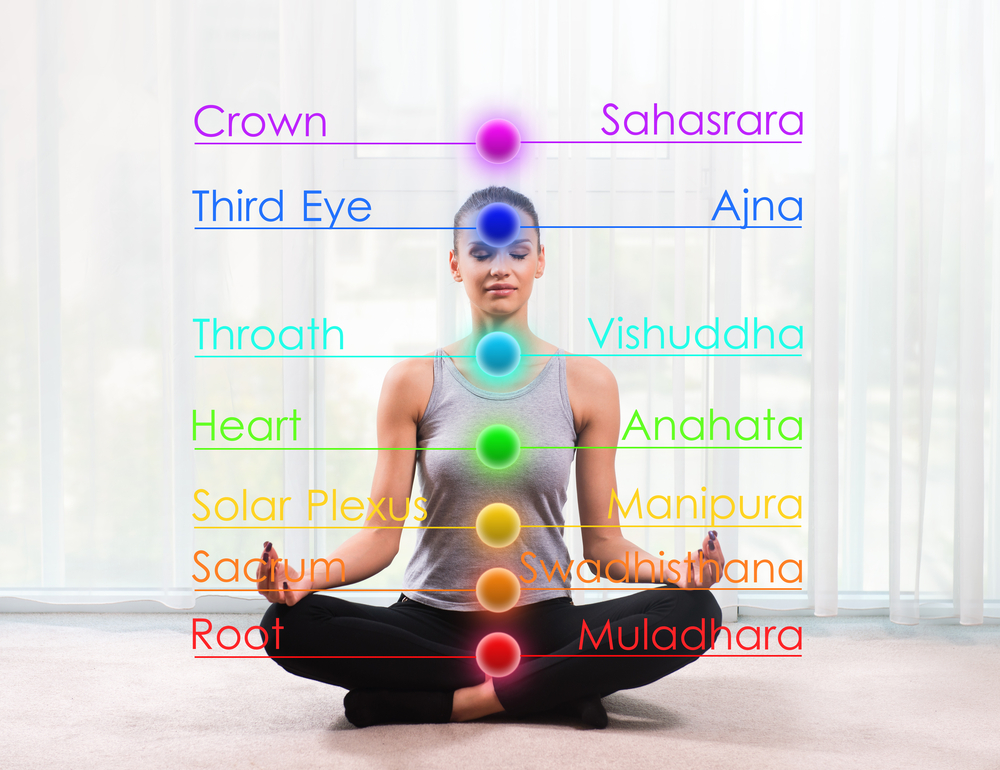
The seven chakras are the major energy centers we're talking about. Various Yoga poses, or asanas can trigger response from our chakras and enable us to change and improve how we feel.
Your first chakra is called Muladhara, which loosely translates to "roots". It's located at the base of the spine.
When the first chakra is balanced properly, we feel good-specifically, we have an obvious sense of self-worth, feel connected to the Divine and see things as they happen in the present tense. We're able to learn from adversity and find the positive in any situation. We also feel able to give our attention to others in a positive way because we see ourselves positively and don't feel wounded.
Some benefits of a balanced first chakra include:
When the first chakra is imbalanced, blocked, suppressed, whatever you want to call it, it messes with our ability to recognize our ow self-worth and goodness.
We become driven in the wrong ways.
When the first chakra is weak, the workaholic takes over, and we keep working harder and harder but without a goal We think working harder and pushing ourselves will create self-value where we don't see it. We become self-serving in a desperate effort to bolster our feeling of weakness and we forget how it impacts others as well as ourselves.
When the first chakra is too strong, we become domineering, greedy and act dishonestly and may have violent thoughts.
Some indications of an imbalanced first chakra:
What we might not have known is that getting to this state of being isn't that hard. There are physical channels within our bodies which we need to trigger in order to create the needed energy and purge that energy that makes us feel stale.

Your first chakra is called Muladhara, which loosely translates to "roots". It's located at the base of the spine.
When the first chakra is balanced properly, we feel good-specifically, we have an obvious sense of self-worth, feel connected to the Divine and see things as they happen in the present tense. We're able to learn from adversity and find the positive in any situation. We also feel able to give our attention to others in a positive way because we see ourselves positively and don't feel wounded.
Some benefits of a balanced first chakra include:
- A well-functioning digestive system
- Trust in self and others
- A healthy drive that allows passion and ambition to be used constructively
When the first chakra is imbalanced, blocked, suppressed, whatever you want to call it, it messes with our ability to recognize our ow self-worth and goodness.
We become driven in the wrong ways.
When the first chakra is weak, the workaholic takes over, and we keep working harder and harder but without a goal We think working harder and pushing ourselves will create self-value where we don't see it. We become self-serving in a desperate effort to bolster our feeling of weakness and we forget how it impacts others as well as ourselves.
When the first chakra is too strong, we become domineering, greedy and act dishonestly and may have violent thoughts.
Some indications of an imbalanced first chakra:
- Issues with digestion; sciatica and back pain
- We fell mad at the world
- We feel worthless and avoid connecting with others
Various Yoga poses can help bring the first chakra into alignment. Keep in mind that some poses calm it down while others wake it up.
- Most forward folds awaken the first chakra (Muladhara), such as Uttanasana (standing forward fold), Paschimottanasana (sitting forward fold) and Setu Bandha Sarvangasana (supported bridge) and help us remove stress and regain a sense of grounding.
- Child pose (Balasana) and Reclining Bound Angle pose (Supta Badha Konasana) help calm it down.
FIND PICTURES AND DESCRIPTIONS OF YOGA POSES IN THE ASANA INDEX AT:
http://yogadancer.com/
I have no affiliation with this site but it is a fabulous resource, so enjoy it and do donate if you can.
SOURCES:
Wednesday, May 24, 2017
Curing Cold Feet
Many would like to go barefoot more often, but a common
complaint is shared by many who don’t…
“I would, but my feet get cold…”
Cold feet are the result of reduced blood circulation in the
feet. Our feet get compressed by our shoes and the blood vessels get
restricted.
Good news: this can be reversed and wildly improved upon…
Start by dong more Yoga....take a short, brisk walk in your shoes first to warm up
Remember something else that also helps.........Summer is here. Go barefoot all the time
at home, and especially on the patio and the walkway that’s warmed by the sun.
Keep a Yoga mat in a convenient place and do some poses throughout the day while doing chores etc.
My personal favorite are Xeroshoes. I was part of the original experiment that later led to their mass production. They are tried and true. Xeroshoes started the trend for barefoot sandals that has made many followers in the market, the selection is huge.
Thursday, May 11, 2017
The Yoga of Integrity
Integrity is largely applicable
to our relationships with others. We rarely think of integrity when we ponder
how we relate to ourselves.
Loosely defined, integrity means truth that only you know;
it means being truthful to others even when you could totally get away with
lying since only you know the truth. It can become very difficult to lie to
yourself.
It’s true that the
power of denial is huge; we can deny almost anything we want to deny, but it
requires us to bury the truth deep inside. It can stay buried for years, even
decades, and causes us to become divided beings; eventually, we fail to ever
feel completeness of the self.
Burying the truth, any truth, no matter how benign, forces
us to disconnect the conscious from the subconscious. We divide ourselves into
two beings: the truth teller and liar, and a type of cold war begins between
our two half selves. To end this war, we must start being truthful to
ourselves.
An exercise in
integrity….
We need not get into a deep, philosophical project here;
your home yoga practice provides an easier option-so find a good spot that
allows you some privacy and step onto your yoga mat. Before you start moving
into your poses, set your mind in the same mode you would use when talking to
someone else.
When you talk to
someone else, you apply all manner of civility; you think carefully about how
you will say things, how you will describe their actions in order to be
supportive and to avoid being insulting. Show the same compassion and
understanding to yourself.
As you acknowledge yourself moving into and holding a yoga
pose, keep your approach less emotional and more analytical.
Instead of saying “this
is where I always screw it up...” or “this is where I start to suck at it…” say,
“this is where I start to lose balance…” this is where it starts to hurt…”
Then examine your position analytically instead of judgmentally;
look at yourself and determine where your feet are, which way your toes are
pointing, the position of your shoulders, etc.
Hold it right there
and then say: “this is where I start to observe what I’m doing instead of
judging myself”
Think in terms of “now, if I move my left foot this way…what
happens?” Make mental notes on what is happening physically, and don’t use the
pose to try to determine what kind of person you are. Trust that you are OK
being who you are, and just focus on the movement and how it makes you feel.
The more you practice
this way, the less judgmental you’ll be, while becoming whole again.
Sunday, May 7, 2017
Meditation Explained-Twisted Bliss
There are all kinds of theories on meditation, but despite all these ideas, there are really no rules to meditation except that you should be sincere with whatever thoughts come to mind when you are meditating yourself.
The truth is, your mind mind not be totally silent or quiet-that's only one type of meditation. If your true needs as a human being mean coming to grips with old or buried thoughts, or just to process all the information that buzzes through our minds as part of our crazy lives, then your mind may be quite noisy during your quiet meditation.
The ancient yogis created the 500 original yoga poses as a means of quieting and calming the mind.
We contort our bodies into twists, hold different standing and sitting poses in order to draw the mind out of the ruts and familiar paths. Familiar paths aren't always negative-in fact, many of thee paths, or grooves, that the mind settles into are simply carved out during our daily journey through life.
Those paths that the mind is used to traversing, over and over again, become so familiar that the many distractions, repetitious patterns of thoughts and actions don't stand out; instead, they become automatic signals and controls that draw us into an pathetic, unchanging state of being.
When we contort and twist our bodies, we contort and twist our minds. our minds are then jarred back into the moment, into the present tense and are freed from the distractions of the familiar grooves where they were stuck.
New thoughts, new revivals of old, positive perspectives we may have forgotten, can then begin again.
The truth is, your mind mind not be totally silent or quiet-that's only one type of meditation. If your true needs as a human being mean coming to grips with old or buried thoughts, or just to process all the information that buzzes through our minds as part of our crazy lives, then your mind may be quite noisy during your quiet meditation.
The ancient yogis created the 500 original yoga poses as a means of quieting and calming the mind.
We contort our bodies into twists, hold different standing and sitting poses in order to draw the mind out of the ruts and familiar paths. Familiar paths aren't always negative-in fact, many of thee paths, or grooves, that the mind settles into are simply carved out during our daily journey through life.
Those paths that the mind is used to traversing, over and over again, become so familiar that the many distractions, repetitious patterns of thoughts and actions don't stand out; instead, they become automatic signals and controls that draw us into an pathetic, unchanging state of being.
When we contort and twist our bodies, we contort and twist our minds. our minds are then jarred back into the moment, into the present tense and are freed from the distractions of the familiar grooves where they were stuck.
New thoughts, new revivals of old, positive perspectives we may have forgotten, can then begin again.
Minimalist Shoes Get New Look for Spring
Minimalist shoes are getting a new look this year-which is good news for a lot of reasons...
For those who don't dig sandals or who spend lots of time in places where they can't wear sandals, these shoes offer all the benefits of barefoot sandals with a close-toed shoe.
They come from Xeroshoes, the original maker of barefoot running sandals that became popular after the release of popular running book Born To Run. While the hype about barefoot running has quieted, the demand for better running shoes-be they sandals or proper running shoes that actually let your feet move naturally, has not.
Nor has Xeroshoes slowed in its growth and success. When it's owner, Lena Phoenix, and her husband, Steven Sashen, professional sprinter who is dubbed the "world's Fastest Jew over 50" ditched Shark Tank's stingy investment offer, their growth only took off.
Forbes Magazine profiled Xeroshoes and gives details of the company's real growth and their strong position in the global shoe market.
As part of the original experiment that led to the production of Xeroshoes-a project that started ten years ago, I'm excited for the new stuff, and attest that the original sandals are still just as awesome!
Nor has Xeroshoes slowed in its growth and success. When it's owner, Lena Phoenix, and her husband, Steven Sashen, professional sprinter who is dubbed the "world's Fastest Jew over 50" ditched Shark Tank's stingy investment offer, their growth only took off.
Forbes Magazine profiled Xeroshoes and gives details of the company's real growth and their strong position in the global shoe market.
As part of the original experiment that led to the production of Xeroshoes-a project that started ten years ago, I'm excited for the new stuff, and attest that the original sandals are still just as awesome!
Friday, March 10, 2017
Living Your Yoga-a must read for every Yogi
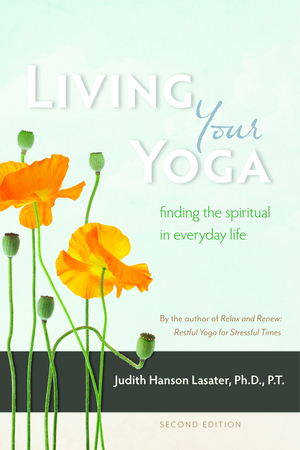
I recently started re-reading my beat-up old copy of Living Your Yoga by Judith Hanson Lasater.
I read it when I first started practicing Yoga 16 years ago and I've since often carried it in my bag over my 11 years as a Yoga teacher.
Living Your Yoga is an awesome companion to have on your journey into your Yoga practice. It relates to normal life-the life we live where we work, where we live-where we live for real.
Anyone can get an amazing experience from some dazzling, far-away Yoga retreat-don't get me wrong, if I can go to Costa Rica or India for a three-week Yoga retreat, I'm there. But the quintessential Yoga practice is one that you live wherever you are,and that's what this book helps you to do, and do it well.
I gain nothing financially from promoting this publication; it's simply that good for any and every Yoga student.
Shanti Om!
-Vincent
Monday, February 20, 2017
Sunday, January 15, 2017
the Yoga of Kindness
Kindness is a component of any spiritual practice and is part of living your Yoga practice as well. Of course, in our Yoga practice, we learn to ignore the voices in our head, the ones usually put there by others, that say we're not being kind enough or that we're bound by a rule that defines kindness in a way that "counts", and which denies the presence of the self,
While we are making good karma when we are acting kind, we aren't looking to "score points".
Kindness loosely means giving to someone in need. Need is a loosely-defined word. Think of a time when you were extremely angry at the world and and some random person was nice to you, exactly when you needed it to happen.
Kindness comes in all sizes...
Such acts are powerful due to sincerity, not size. Maybe you were carrying a bunch of stuff through a doorway and you about to drop all of it on the floor, and someone held the door for you so you could get through, preventing an aggravating you certainly wanted to avoid. Maybe someone gave you a ride when you were stranded,
Whatever the act of kindness you witnessed or received, it made you feel alive again and reminded you that you weren't alone...
A gift of a flower, a hug or even just a good compliment can change a whole day and change the whole course of life for a person. To know that you have such power to change is in itself a great gift to you, and makes it easy to give without need of a gift in return.
While we are making good karma when we are acting kind, we aren't looking to "score points".
Kindness loosely means giving to someone in need. Need is a loosely-defined word. Think of a time when you were extremely angry at the world and and some random person was nice to you, exactly when you needed it to happen.
Kindness comes in all sizes...
Such acts are powerful due to sincerity, not size. Maybe you were carrying a bunch of stuff through a doorway and you about to drop all of it on the floor, and someone held the door for you so you could get through, preventing an aggravating you certainly wanted to avoid. Maybe someone gave you a ride when you were stranded,
Whatever the act of kindness you witnessed or received, it made you feel alive again and reminded you that you weren't alone...
A gift of a flower, a hug or even just a good compliment can change a whole day and change the whole course of life for a person. To know that you have such power to change is in itself a great gift to you, and makes it easy to give without need of a gift in return.
Shanti Om!
Labels:
Ahimsa,
kindness,
kindness in yoga,
Metta,
yoga,
yoga sutras
Sunday, October 16, 2016
Yamas of Yoga...Ahimsa-Non-harming
Deva Primal chants the mantra of ahimsa
"may all beings everywhere be happy and free"
Ahimsa is probably the most talked-about of the yamas because it is easier to define it as a concrete concept. Ahimsa literally means "non-harming", but is better understood as non-violence. Of course, this is where a bot of abstract thinking is necessary.
Violence has many forms and faces; the biggest example of violence when it comes to practicing Yoga is violence toward the self.
We're all familiar with the term "beating yourself up". In our quest to be good, we become very critical of our own moral actions. We als may push ourselves too hard when working out because we don't want to let ourselves be "wimpy" or whatever other term we might use to say we're slacking. These are two ways we hold grudges against ourselves just as we might hold grudges against others.
If you can't forgive someone for something they've done against you, or if you can't forgive yourself for something you've done, this is an act of violence because it pushes love away.
Gia My Yoga
One of the most-popular ways yogis have sought to practice ahimsa in recent decades is to not eat meat. This idea seems simple but can be tough. Not everyone who has tried a vegetarian or vegan diet has managed to avoid health problems. To have a diet that makes you unhealthy means you are harming yourself.
We can take a simpler view of ahimsa by simply seeking to avoid being unnecessarily hurtful toward ourselves and toward others. This doesn't mean lying as opposed to truth telling, but it may mean waiting until the right time to tell someone something. We can also avoid needless expression, such as reminding someone of a mistake they are already aware that they made and that you know they are already working to correct.
Sources:
Gia My Yoga
Mind Body Green
Insight State
Saturday, October 8, 2016
Yamas of Yoga-Satya
The second Yama of Yoga is Satya which translates in English to "truthfullness"
The famous, former US House Speaker Tip O'Neill is credited with saying:
"Always tell the truth, that way you have a lot less to remember"
Or something very similar. Of course, O'Neill was speaking with reference to politics, not Yoga. But as Yoga means the connection and union of all forces and all things in proper measure, we can contemplate the Speaker's quote quite handily.
Being truthful protects us from being roiled in scandal that can come from lying; scandals can range from political issues at work to conflicts with clients in business, and problems with friends and family.
Often, what makes it tough to be truthful is the timing of a specific situation. Sometimes, it is more proper to delay the truth in order to avoid doing harm, especially in a truly grave situation. This tactic can also backfire, say, if we lie to someone and later tell the truth while also saying:
How often has someone told us: "I lied becasue I didn't want to hurt your feelings" ?
It's happened at some point, to each of us. We've either done it to someone or had it done to us, or both.
This tactic will always backfire, because you've already hurt the person's feelings by lying, and by trying to do right by truth telling at a later time, you hurt that person double fold.
It's easy to learn from mistakes involving other people, quite simply, because after making this type of mistake, people react and want to push you away. You get lonely and you feel like a schmuck and don't ever want to feel that way again.
So what does this have to do with your Yoga practice? Without digging deeper into dogmatic moral contexts, let's look inward to ourselves.
Without other people to scrutinize our thoughts and actions, it gets tougher to tell how truth telling can be beneficial or negatively consequential.
The tenet of truth is to be honest with yourself, always. When dealing with your inner self, you need only be able to forgive yourself and love yourself. There's no timing involved with that; there are no political or social situations that are at stake when we are dealing with our own selves only.
Be honest with yourself and you won't create situations of denial that cloud our ability to see who and what we really are. When we see our true selves, and act in honest accordance to that knowledge, then we don't make clouded decisions.
When we don't deny who we really are, we are better to see who we are really talking to and interacting with, and we're far less likely to speak or act in a manner that distorts the truth.
Be truthful to yourself, and you'll have less trouble seeing the appropriate boundaries of truth with respect to to others with whom we share our world.
The famous, former US House Speaker Tip O'Neill is credited with saying:
"Always tell the truth, that way you have a lot less to remember"
Or something very similar. Of course, O'Neill was speaking with reference to politics, not Yoga. But as Yoga means the connection and union of all forces and all things in proper measure, we can contemplate the Speaker's quote quite handily.
| Former House SPeaker Tip O'Neill, right, shakes hands with former President Ronald Reagan. While O'Neill was a harsh critic of Reagan, he became famous for working across the political aisle to broker successful and fruitful political compromises. |
Being truthful protects us from being roiled in scandal that can come from lying; scandals can range from political issues at work to conflicts with clients in business, and problems with friends and family.
Often, what makes it tough to be truthful is the timing of a specific situation. Sometimes, it is more proper to delay the truth in order to avoid doing harm, especially in a truly grave situation. This tactic can also backfire, say, if we lie to someone and later tell the truth while also saying:
How often has someone told us: "I lied becasue I didn't want to hurt your feelings" ?
It's happened at some point, to each of us. We've either done it to someone or had it done to us, or both.
This tactic will always backfire, because you've already hurt the person's feelings by lying, and by trying to do right by truth telling at a later time, you hurt that person double fold.
It's easy to learn from mistakes involving other people, quite simply, because after making this type of mistake, people react and want to push you away. You get lonely and you feel like a schmuck and don't ever want to feel that way again.
So what does this have to do with your Yoga practice? Without digging deeper into dogmatic moral contexts, let's look inward to ourselves.
Without other people to scrutinize our thoughts and actions, it gets tougher to tell how truth telling can be beneficial or negatively consequential.
The tenet of truth is to be honest with yourself, always. When dealing with your inner self, you need only be able to forgive yourself and love yourself. There's no timing involved with that; there are no political or social situations that are at stake when we are dealing with our own selves only.
Be honest with yourself and you won't create situations of denial that cloud our ability to see who and what we really are. When we see our true selves, and act in honest accordance to that knowledge, then we don't make clouded decisions.
When we don't deny who we really are, we are better to see who we are really talking to and interacting with, and we're far less likely to speak or act in a manner that distorts the truth.
Be truthful to yourself, and you'll have less trouble seeing the appropriate boundaries of truth with respect to to others with whom we share our world.

![]() |
| Author and Yoga Instructor Vincent Gerbino |
Saturday, October 1, 2016
The Yamas of Yoga-Aparigraha
Study the Yamas of Yoga-Aparigraha
Possessiveness, and the seemingly-noble pursuit of non-possessiveness is always a touchy subject. We can be possessive of material things, and we can be possessive of other people.
Sometimes, when we're possessive of people, it,s a control thing, other times, we feel insecure about ourselves and use other people to fill the void. Generally, we learn to temper our possessiveness of people, and of things by observing our own mistakes. That's a necessary part of developing wisdom and enlightenment.
Possessiveness of a concept, or of a perceived conception of what is ideal is the real challenge with the Yama of Aparigraha.
Holding onto an idea, or a concept you create in your head is a different, more-powerful form of greed that is as elusive as it is obvious. Maybe we see someone else in Yoga class who can do an asana in what we call "perfect" form, with perfect meaning "like the person in the Yoga magazine.
There's nothing wrong with seeing a picture of someone doing a pose and saying: "wow, I want to do that!" But we need to remember not to be too greedy when giving our own selves credit for the effort put fourth, no matter how our pose looks.
Even more important is not being too greedy with our sense of receiving goodness...stated more simply, if your heart can't be allowed to feel and receive goodness, it means we're not giving goodness to ourselves.
What on Earth does this have to do with doing a Yoga pose, like I was just talking about? Well, let's face it: stretching in any pose generally feels good. We release stress and open the chakras and start to feel energized at the same time we start to feel relaxed.
We have to be kind enough to ourselves to let that good stuff be felt. Being kind to ourselves is the opposite of being greedy with our own affection.
The same concept can be applied to people-not being too greedy to see the good being given to us-we'll never feel it if we shut it out. We can also start to see more goodness in our current net worth, whatever that may be, and
Says spiritual teacher Deborah Adele: "An unhealthy need to acquire material things drives discontent that’s similar to clinging to things you have...whenever we become possessive, we are in turn possessed”.
Blessings!
Sources:
Deborah Adele Spiritual Yoga Teacher and author of The Yamas & Niyamas: Exploring Yoga's Ethical Practice
Thursday, September 29, 2016
How to Succeed in Any Balancing Pose
Learn to Fall
This is something I tell every Yoga client in every class, no matter what. I don't mean hold the pose until you fall over. What you need to do do is practice falling out of the pose-properly. Take a pose such as Salamba Sirsasana, or supported headstand.
The obvious, and sage advice, is to practice the pose on a wall. The wall will prevent a major accident; but many students become physically capable of getting into the pose and holding it without needing the wall, but hesitate to move away from it. The issue they have is that they have not intentionally tought themselves how to fall.
What one needs to do is practice repeatedly dropping the feet back to the floor-a.k.a. falling properly. Also, one must talk herself through the whole process of movement.
Talk yourself through the movement
Talking yourself through the process of moving into a balancing pose, and falling properly out of the pose isn't any different than doing so in any other pose. You move slow enough that your conscious mind, and your consious heart have time to "see" the movement by way of feeling it. Before even trying a balancing pose, take a moment in a more-basic pose, such as Virabhadrsana-Warrior pose.
In Warrior pose, we distribute our body weight between our feet by adjusting every muscle from the toes, ankles and legs to the torso, right up through our shoulders and arms.
Go barefoot more often
For you to have good balance, your feet need to be able to assume their natural shape. Wearing shoes conmpresses the feet. The bones are pushed together and the muscles and tendons get squeezed out of shape and can't fully function. The resulting effect is instability in your stance and your walk, which will also lead to problems of the ankles, knees and hips. Even flat sandals such as flip flops can cause some drag on the soles of the feet and result in restricted movement.
The solution: go barefoot when you can. Whenyou get home from work, get out of your shoes and socks. If you have high atrches, you'll have to build a tolorance for being barefoot and you'll feel fatigue more quickly. You might need to put on your Birkenstocks or running shoes after you've been barefoot for a while.
Going barefoot will help most directly with standing balancing poses, but will help with all balancings, including handstands and arm balances. Tight muslces on one end of the body always affect the body elsewhere.
Saturday, September 17, 2016
Danica Patrick-Better Known For Yoga?
Danica Patrick maybe best known for auto racing, but lately, she's made a bigger splash doing yoga on a boat. While the boat included a crew of partygoers, Danica's yoga is as serious as her racing.
Maybe its that the NASCAR crowd isn't so into Yoga, and that's why Danica gets so much attention. It doens't hurt that she did her latest yoga poses for the public in a bikini. She's posted pletny of Instgram pics of her posing in, well, regular Yoga clothes.
She was described earlier this year as "rediculously good at yoga" by USA Today, and as far as the physical practice goes, the proof is in the pose pics. Of course, any practitioner of yoga knows there's more to it, and so does Danica, when she talks of breathign exercises being essential to her yoag practice.
“Breath is the one thing that I really do use from yoga in the race car,” she said. “When things get tense it’s in through the nose, out through the mouth. Inevitably it calms your heart rate down. It calms you down. I by all means use breath in the car, which is something that I’ve used in yoga,”
-Danica Patrick to USA Today Sports, Ferbuary, 2016.
She'll no doubt add the Yoga helps her avoid the aches and pains that come from all the sitting and driving.....Namaste!
![]() |
| Posted viaInstagram by Danica Patrick (left, in Wheel Pose) with Katylin Sweet (right, in Camel Pose) |
Maybe its that the NASCAR crowd isn't so into Yoga, and that's why Danica gets so much attention. It doens't hurt that she did her latest yoga poses for the public in a bikini. She's posted pletny of Instgram pics of her posing in, well, regular Yoga clothes.
She was described earlier this year as "rediculously good at yoga" by USA Today, and as far as the physical practice goes, the proof is in the pose pics. Of course, any practitioner of yoga knows there's more to it, and so does Danica, when she talks of breathign exercises being essential to her yoag practice.
“Breath is the one thing that I really do use from yoga in the race car,” she said. “When things get tense it’s in through the nose, out through the mouth. Inevitably it calms your heart rate down. It calms you down. I by all means use breath in the car, which is something that I’ve used in yoga,”
-Danica Patrick to USA Today Sports, Ferbuary, 2016.
She'll no doubt add the Yoga helps her avoid the aches and pains that come from all the sitting and driving.....Namaste!
Thursday, June 9, 2016
The Yamas of Yoga...Brahmacharya
"When the sadhaka is firmly established in continence, knowledge, vigour, valour and energy flow to him"
We're talking the fourth Yama, Brahmachara. The loose definition of this sanskrit word is continence. But the words abstinence and celibacy often also comes about in when yogis talk about this.
Excess of any kind corrupts us; that's why it is called excess.
Perhaps the biggest challenge here isn't giving up things or actions. Building a daily life pattern that gives us enough of what we truly need without going overboard, or stopping to soon, is indeed a bigger challenge. This, of course, is the challenge of living our yoga practice.
For each of us, our definition of brahmacharya is going to be a bit different. The ideas of restraint and moderation shouldn't call for us to inflict pain upon ourselves. We'll be much better off in seeking alternatives to what we may be restraining ourselves from. This also means that every so often, we have to acknowledge, have and experience what we're restraining ourselves from in order to truly understand the value that is the absence of whatever we abstain from.
Many Christians give up something for Lent each year. When they rescind from their abstinence, many will have more appreciation and willingness to moderate their future indulgences. Muslims fast each year during Ramadan. Jews fast for various holidays. This idea isn't owned by any particular spiritual practitioner; all that is needed to make it valid is for the practitioner to be sincere in her or his devotion.

Other notes...
The "sadhaka" is the spiritual practitioner who has chosen a path of devotion. A "sadhana" is one's consistent yoga practice on and off the mat. Brahman is a high state of spiritual being that develops through practice.
Subscribe to:
Posts (Atom)